Send the exact assignment or rubric from your classroom and a custom sample written to it lands in 24 to 48 hours, the first one free. NR 395 is Chamberlain’s Ethics, Integrity, and Professional Nursing Trends course. It centers on ethical reasoning, professional integrity, and current nursing trends, worked through position papers and dilemma analysis. Searches like "NR 395 week 4 assignment example", "NR395 sample paper", and "NR 395 week samples" land on this page.
What NR 395 is really about
NR 395 covers ground working RNs think they know, ethics from the floor, and ground they usually do not, the formal machinery for reasoning about it. The course moves through the profession's ethical code, principles like autonomy and justice, academic and professional integrity, and a rotating set of current trends: staffing pressures, social media conduct, technology in care, workforce wellbeing. What makes it distinctive in the RN-to-BSN track is the kind of writing it grades. Most deliverables ask for a defended position, not a report, which means naming a dilemma, weighing principles that collide, committing to a resolution, and supporting the commitment with literature rather than gut feeling or unit precedent.
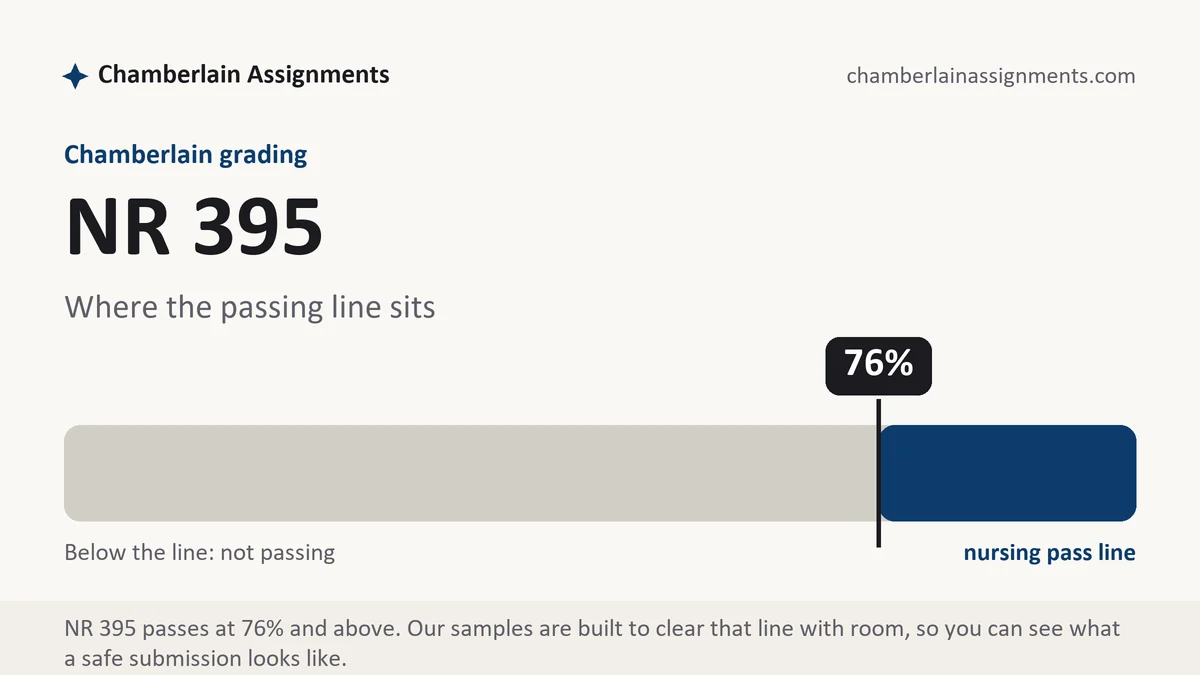
Weeks alternate between discussion heavy stretches and written analysis. Discussions typically open early in the week with a scenario, a nurse witnessing a shortcut, a post that breaches patient privacy, a staffing conflict, and expect replies that push classmates' reasoning, not just agreement. Written assignments in many sections include an ethical dilemma analysis built on a structured framework and a paper or presentation on a professional trend with implications for practice. Integrity gets its own treatment, usually early, covering citation honesty and originality expectations that apply to everything after. Points follow the standard letter grade math, the analysis papers usually weighing heaviest, and rubric rows consistently reserve their largest share for the quality of the argument.
What NR 395’s assessments ask for
The recurring ask is a stance you can defend. A dilemma assignment gives you competing obligations, tell the truth or protect a colleague, honor a refusal or push treatment, and wants the collision mapped in principle terms before you resolve it. Trend work asks you to pick a development reshaping nursing, present the evidence on both sides, and end with a position on what the profession should do. Discussions rehearse the same muscle at smaller scale each week. Sources are non negotiable throughout: ethical claims need the code or the literature behind them, and integrity standards introduced early are enforced on every submission after. The weekly clock stays Chamberlain standard, posts early, assignments closing out the week on Sunday.
Where students lose points in NR 395
Ethics papers from RNs new to academic writing tend to fail in a specific, fixable way: they inventory instead of argue. The dilemma gets described, both options get summarized, relevant code provisions get quoted, and the paper ends without the writer ever taking a side, which forfeits the analysis rows outright. Graders read that as a briefing document, and the rubric has no row for briefings. The parallel leak is conversational. Ethics discussions reward the back and forth, and posting late in the week, after the debate has moved on, leaves your replies talking to an empty room for reduced points. Commit to a position on paper and a posting day early in the week, and NR 395 becomes one of the friendlier courses in the track.
The NR 395 drawers
NR 395 Week 1 discussion post example
Opening weeks typically frame professional identity and the ethical code before any dilemmas appear. On request, free, 24-48h.
NR 395 Week 2 ethics case analysis example
Academic and professional integrity often take week 2, setting originality expectations for the session. On request, free, 24-48h.
NR 395 Week 3 academic integrity reflection example
A structured ethical dilemma analysis typically begins here, principles first, resolution later. On request, free, 24-48h.
NR 395 Week 4 position paper example
Discussions often test autonomy, justice, and truth telling against messy floor scenarios. On request, free, 24-48h.
NR 395 Week 5 ethical framework analysis example
The full dilemma paper often lands midcourse with the heaviest rubric of the session. On request, free, 24-48h.
NR 395 Week 6 trend analysis example
Trend selection typically happens here, choosing a development in nursing worth arguing about. On request, free, 24-48h.
NR 395 Week 7 professional issue analysis example
In many sections the trends paper or presentation closes out the analytical work. On request, free, 24-48h.
NR 395 Week 8 reflection example
Final reflections typically ask which ethical commitments follow you back to practice. On request, free, 24-48h.
Your classroom shows something else?
Chamberlain revises courses; week counts and deliverables shift between sessions. Send what your classroom shows and the desk matches it exactly.
Using a NR 395 sample the right way
Read an NR 395 sample twice: once for structure, watching where the thesis lands and how each section advances it, and once for sourcing, noting how code provisions and studies get attached to claims rather than displayed. Then argue your own dilemma; borrowed positions read hollow and graders notice. Because dilemma frameworks and trend prompts shift between sections, a shelf sample may not mirror yours, in which case send the instructions and rubric and we will write a custom sample against them. The first is free and typically back within 24-48h, early enough to shape your draft instead of just checking it.
How these samples are written
Method, in one line: rubric first, structure from the rubric, templates exact, discussions final on arrival. Week counts vary by course version; the catch-all row absorbs the difference. Your free request matches what your classroom actually shows.
NR 395 questions, answered
My ethics paper covered every side of the dilemma. Why did the analysis section score low?
Coverage is the setup, not the analysis. NR 395 rubrics award those rows for a defended resolution: which principle you prioritized, why, and what evidence supports the choice. A paper that presents all sides and stops has done the reading but not the reasoning. End every section knowing what it proved. Our samples mark that turn from summary to stance clearly enough to copy the move.
Is it risky to take a strong position my instructor might disagree with?
No; it is risky not to. Instructors grade the defense, not the verdict, and a well supported position they personally reject outscores a safe summary every time. What actually loses points is a stance without warrant: no principles weighed, no code cited, no literature. Argue cleanly and disagreement becomes discussion fodder, which this course explicitly rewards.
The trends discussions move fast. How do I stop losing the reply points?
Treat the debate like a shift handoff: show up at the start. In trend discussions the strongest exchanges happen midweek, so an initial post early in the week puts your argument where classmates will engage it, and replies practically write themselves. Arriving Friday means responding to finished conversations. If drafting speed is the bottleneck, a model post from us can clear it; first request free, 24-48h.